Remote Viewing - The Pat Price Papers
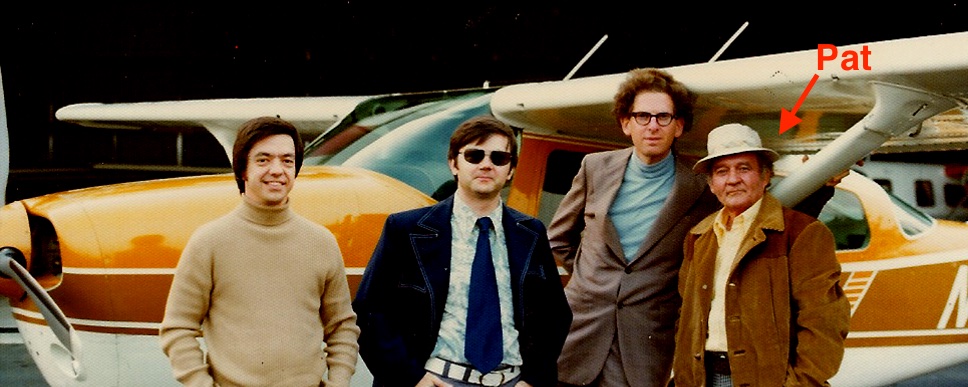
Recruited in the early 1970s by physicists Hal Puthoff and Russell Targ at Stanford Research Institute (SRI), Price worked on CIA- and military-funded efforts (SCANATE and later Stargate).
Pat Price (Patrick Harold Price, 1918–1975)
Pat Price was a former Burbank, California, police officer, detective, and city commissioner who became one of the earliest and most celebrated participants in the U.S. government’s classified remote viewing programs during the Cold War.
Background and Recruitment
Recruited in the early 1970s by physicists Hal Puthoff and Russell Targ at Stanford Research Institute (SRI), Price worked on CIA- and military-funded efforts such as SCANATE and the later Stargate Project.
He was widely praised for his apparent accuracy in describing distant or hidden targets — such as secret Soviet facilities — using only coordinates.
The Four Underground Extraterrestrial Bases
Independently of standard protocols, Price remote-viewed what he described as four underground extraterrestrial/UFO bases hidden inside mountains around the world. In 1973, he presented Hal Puthoff with a thick unsolicited dossier (reportedly 47 pages) containing coordinates, detailed sketches, transcripts, and descriptions of the sites, personnel, craft, and technology.
The Locations
-
Mount Hayes, Alaska
Described as a major command, weather/geological control, and mind-influence center. -
Mount Perdido, Pyrenees (Spain/France border)
Primary operations and research base with advanced propulsion systems and hangars. -
Mount Inyangani (Nyangani), Zimbabwe
Maintenance, overhaul, and tech/spiritual-energy site. -
Mount Ziel (Zeil), Australia
Personnel hub, communications, and surveillance center.
Details and Legacy
Price portrayed the facilities as interconnected, staffed by humanoid extraterrestrials using advanced technology, implants, human monitoring, and sophisticated security measures. Some accounts suggest the sites became aware of his remote viewing.
Though unofficial, these sessions reportedly inspired Project 8200, in which other military remote viewers (under Skip Atwater) revisited the sites and produced corroborating data.
Price died suddenly in 1975 (officially a heart attack), which added to the intrigue surrounding his work. His full “alien bases” papers — long held privately — have circulated in recent years and remain a cornerstone of remote viewing and UFO lore.
Whether viewed as genuine remote viewing successes, imaginative constructs, or something in between, Pat Price’s reports continue to fascinate researchers and enthusiasts alike.